

Swiss engagement in international organisations
Through its collaboration with numerous international organisations, Switzerland engages in global discussions on the most pressing issues of our time. In addition, it regularly accepts leadership responsibility. Here we take a closer look at some of Switzerland’s current mandates.
Organization for Security and Co-operation in Europe (OSCE)
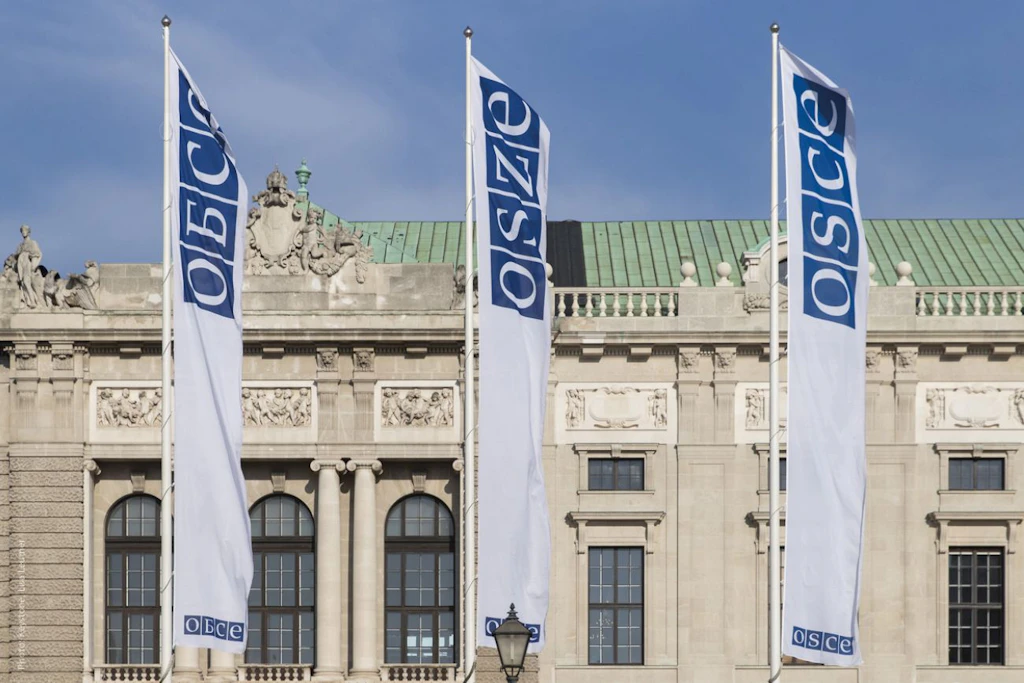
With members in North America, Europe and Asia, the Organization for Security and Co-operation in Europe (OSCE) is the world’s largest regional security organisation. As a political forum for dialogue, it addresses a broad range of regional security issues encompassing politico-military matters, economic and environmental issues and human rights.
In 2026, founding member Switzerland is chairing the OSCE – making it the first country to accept this responsibility for a third time, after all of the other 56 participating states approved its candidacy at the end of 2024.
Switzerland is taking over the leadership of the OSCE at a difficult time for the organisation, owing to geopolitical developments and Russia’s military aggression against Ukraine. The fact that one participating state of the OSCE is at war with another participating state severely restricts the organisation’s room for manoeuvre. By agreeing to chair the OSCE in 2026, Switzerland is assuming its share of responsibility for peace and security in Europe and in the territory of the organisation's participating states.
Switzerland is hosting several international conferences to foster dialogue on its five priorities for 2026. For the latest information, please consult this news platform.
Switzerland’s good offices for the benefit of peace
Promoting peace is enshrined in the Swiss Federal Constitution. With its neutrality, humanitarian tradition, experience and expertise, Switzerland enjoys a high degree of integrity in promoting peace. But what exactly are Swiss “good offices” and what are some of the conflicts that Switzerland has helped settle? Our primer explains.
United Nations Human Rights Council (UNHRC)
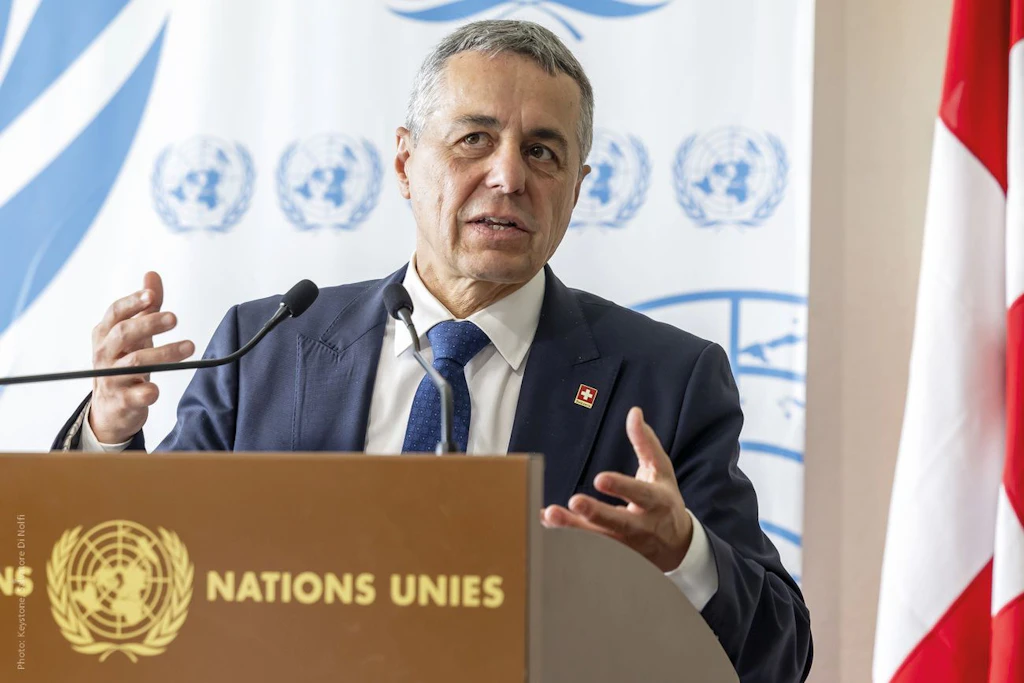
One of Switzerland’s successful diplomatic initiatives includes the establishment of the UN Human Rights Council (UNHRC) in Geneva in 2006. With 47 member states, the HRC is a subsidiary body of the General Assembly and meets at the UN office in Geneva.
Following its HRC memberships in 2006-2009, 2010-2013, and 2016-2018, Switzerland is serving again from 2025-2027. Over the course of these three years, the emphasis will be on the traditional priorities of human rights diplomacy, such as freedom of expression, the rights of minorities and vulnerable groups, the abolition of the death penalty, the prevention of and fight against torture, and women’s rights.
The year 2025 also marks the first time that a Swiss diplomat is holding the HRC presidency. Ambassador Jürg Lauber is a strong proponent of Switzerland’s commitment to human rights and multilateral dialogue.
Switzerland and the UN
Switzerland joined the United Nations following a popular referendum in 2002, where 55% of voters endorsed Swiss membership. It is the only country that joined the UN as the result of a popular vote. This dossier provides a detailed history of Switzerland and the UN, including highlights from when Switzerland served on the UN Security Council from 2023-2024.
North Atlantic Treaty Organization (NATO)
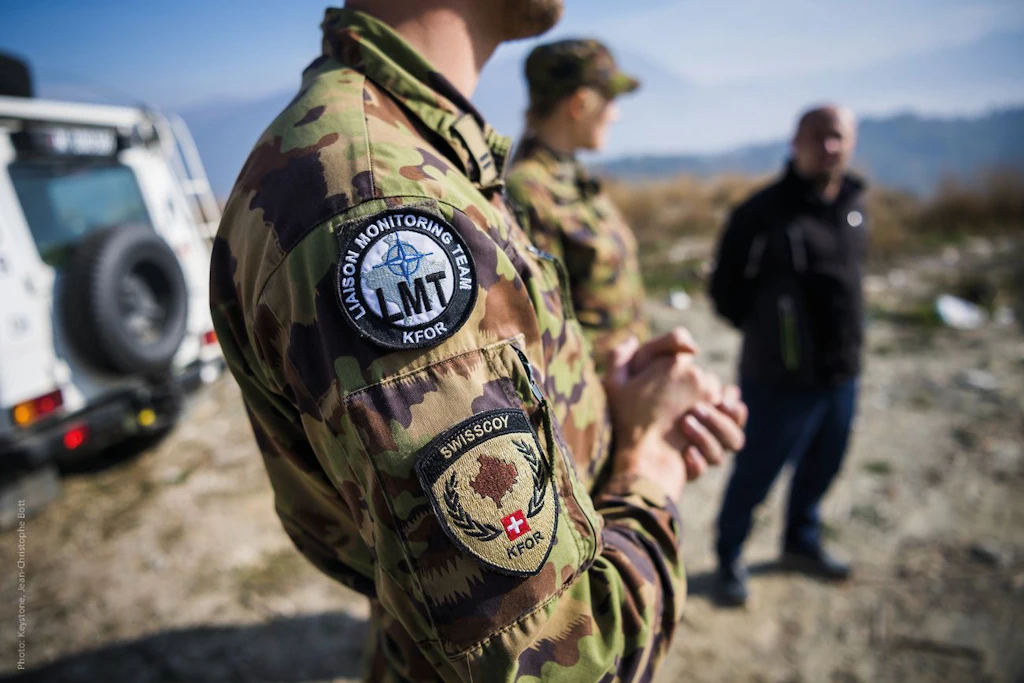
As a neutral country, Switzerland is not a member of NATO – a political and military defence alliance of 32 European and North American countries working for security and peace.
Instead, Switzerland cooperates with NATO within the framework of the Partnership for Peace (PfP). The PfP provides Switzerland with an institutionalised and tailor-made framework for security policy dialogue and practical cooperation with NATO, its allies and other partner countries. Together with Brussels-based NATO, Switzerland periodically defines its priorities and activities in an Individually Tailored Partnership Programme. Activities can include courses and training exercises, as well as information sharing and expert briefings.
In accordance with neutrality, Switzerland does not enter into any commitments which might pose the risk of being drawn into a conflict. However, neutrality does not prevent Switzerland from taking precautions to defend itself against new threats. International cooperation with key partners is a fundamental pillar of these efforts.